What Credit Score Do You Need to Buy a House in Topeka, Kansas?
Understanding mortgage credit requirements, how your score affects your home loan, and what you can do to prepare for buying a home.
Three digits. That's all it takes to make a big difference in your homebuying journey.
Your credit score is one of the first things a mortgage lender will review when you're getting ready to purchase a home. And for many buyers, especially first-time homebuyers, it can be one of the most intimidating parts of the process.
One of the questions I hear from people considering buying a home in Topeka is, "Is my credit score good enough to buy a house?"
The good news is that you don't need perfect credit to become a homeowner. There are different mortgage programs with different qualification requirements, and some offer more flexibility than you might expect.
Whether you're ready to buy now or hoping to purchase in the next year, understanding how your credit works is a great place to start.
How is your credit score calculated?
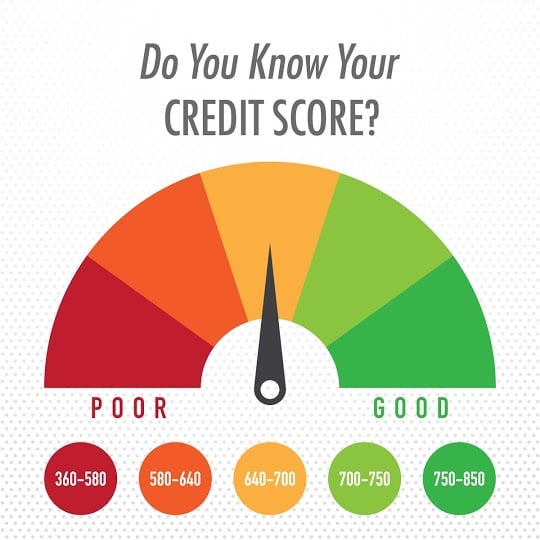
Your credit score is a three-digit number that helps lenders evaluate how you've managed credit in the past.
Most people are familiar with FICO Scores, which generally range from 300 to 850. But you may have several different credit scores depending on the scoring model and information used.
The three major credit reporting agencies are Equifax, Experian, and TransUnion.
These companies collect information about your credit accounts, payment history, balances, and other credit activity. Scoring models use that information to calculate a score.
What factors affect your FICO Score?
For a typical FICO Score, five categories play a role:
- Payment history (35%): Whether you've made payments on time.
- Amounts owed (30%): How much debt you're carrying, including how much of your available revolving credit you're using.
- Length of credit history (15%): How long your credit accounts have been established.
- New credit (10%): Recent credit applications and newly opened accounts.
- Credit mix (10%): Your experience managing different types of credit accounts.
These are general FICO weighting categories, and their influence can vary by credit profile and scoring model.
You can learn more directly from myFICO's credit education resources.
What is considered a good credit score to buy a house in Topeka?
Here's something important to understand: there's no single credit score that every buyer must have to purchase a home.
Your eligibility depends on the type of mortgage you're applying for, the lender's requirements, and other financial factors.
Different mortgage programs may provide different options.
Conventional loans
Conventional loans are common mortgage options that aren't insured by the FHA or guaranteed by the VA or USDA.
Some conventional lending programs and lenders use a credit score around 620 as a general benchmark, but requirements vary. Certain automated underwriting options may evaluate credit differently.
A higher credit score may help you qualify for more favorable loan terms, depending on your overall financial profile.
FHA loans
FHA loans are government-insured mortgages that may offer flexibility for qualifying buyers.
Under longstanding FHA credit-score guidelines, borrowers with qualifying scores of 580 or higher may be eligible for a down payment as low as 3.5%.
Borrowers with scores between 500 and 579 may qualify under more restrictive conditions, generally requiring at least 10% down.
However, individual lenders may apply stricter requirements, and meeting a credit-score threshold doesn't guarantee approval.
VA loans
VA loans are available to eligible veterans, active-duty service members, and certain surviving spouses.
The Department of Veterans Affairs doesn't establish one universal minimum credit score for its home loan guaranty program, but individual lenders may have their own requirements.
If you're eligible for VA financing, it's worth speaking with a lender who regularly works with VA borrowers.
USDA loans
USDA Rural Development loans may be an option for qualifying buyers purchasing eligible properties in designated rural areas.
Some lenders use a score around 640 as a guideline for certain underwriting processes, but eligibility and credit evaluation depend on the loan program and lender.
Not every property in or around Topeka qualifies, so it's important to confirm both the property location and your financial eligibility.
The biggest takeaway? Don't automatically assume you can't buy a home because your score is below a number you saw online. Talk with a mortgage lender who can evaluate your actual situation.
How does your credit score affect your mortgage?
Your credit score can influence more than just whether you qualify for a loan.
It can also affect how much your mortgage costs over time.
Your mortgage interest rate
In many situations, borrowers with stronger credit profiles may qualify for lower mortgage interest rates than borrowers with weaker credit profiles.
Even a relatively small difference in interest rate can add up over the life of a 30-year mortgage.
For example, on a hypothetical $200,000, 30-year fixed-rate loan:
- At 6.0% interest: Approximately $1,199 per month in principal and interest.
- At 7.0% interest: Approximately $1,331 per month in principal and interest.
- Difference: Approximately $132 per month.
That's roughly $1,584 per year in additional principal and interest payments.
These are hypothetical rates used only to illustrate the calculation, not current mortgage quotes. Payments exclude property taxes, insurance, and other potential costs.
Of course, credit score isn't the only factor lenders use to determine rates. Down payment, loan type, property characteristics, and market conditions also matter.
Your loan options
Your credit score may affect which mortgage programs are available to you and what requirements apply.
A lender can help you compare different financing options and determine which ones fit your financial situation.
Mortgage insurance and other costs
Depending on your loan program, credit score may also affect certain mortgage insurance premiums or loan pricing adjustments.
That makes it important to compare the complete monthly payment rather than looking at the interest rate alone.
How can you improve your credit score before buying a house?
If your credit score isn't where you'd like it to be, there are several steps you can take to improve your financial position before applying for a mortgage.
Some changes may help relatively quickly, while others take time.
1. Review your credit reports
One of the first things I recommend is checking your credit reports for errors.
You can request free credit reports from the three major credit reporting agencies through AnnualCreditReport.com.
Free weekly online reports are currently available through this official service.
When reviewing your reports, look for:
- Accounts you don't recognize
- Incorrect balances or credit limits
- Payments incorrectly reported as late
- Accounts incorrectly listed as open or closed
- Inaccurate personal information
If you find an error, follow the credit reporting agency's dispute process.
The Consumer Financial Protection Bureau offers additional guidance on identifying credit report mistakes.
2. Make every payment on time
Payment history is one of the most influential factors in your credit score.
Consistently making payments by their due dates is one of the most important habits you can build.
If you occasionally forget due dates, consider setting reminders or enrolling in automatic payments where appropriate.
3. Pay down credit card balances
Another important factor is credit utilization, which measures how much of your available revolving credit you're using.
For example, if you have a credit card with a $10,000 limit and a $5,000 balance, you're using 50% of your available credit on that card.
Reducing high balances may help your credit score, especially as the lower balances are reported to the credit bureaus.
But don't put yourself in a difficult financial position by using all your savings to pay down debt. It's important to maintain funds for emergencies, your down payment, and closing costs.
4. Be careful about opening new accounts
When you're preparing to purchase a home, it's generally a good idea to avoid taking on unnecessary new debt.
Opening a new credit card or financing a vehicle could affect your credit score, debt-to-income ratio, or mortgage eligibility.
Before making any major financial changes, check with your mortgage lender.
5. Don't automatically close old credit cards
Closing a credit card can reduce your available credit and potentially increase your credit utilization ratio.
That doesn't mean you should keep every account open forever, but it's worth understanding the potential impact before closing an account while preparing for a mortgage.
6. Talk with a lender early
One of the best things you can do is speak with a lender before you're ready to make an offer.
Even if your credit needs work, a lender may be able to explain which factors are affecting your eligibility and what you should focus on improving.
That gives you a plan rather than leaving you guessing.
How long does it take to improve your credit score?
Unfortunately, there's no universal timeline for improving credit.
It depends on what's affecting your score and the changes you're able to make.
Paying down credit card balances may affect your score after updated balances are reported, while rebuilding a history of on-time payments generally takes longer.
Correcting an error on your credit report can also help if the inaccurate information was negatively affecting your score.
However, no legitimate service can guarantee a specific credit score increase within a certain number of days.
If you're hoping to buy a home in Topeka within the next six to twelve months, now is a great time to review your credit and begin preparing.
What if your credit score isn't high enough yet?
One thing I always want buyers to understand is that not being ready to purchase today doesn't mean homeownership is out of reach.
Sometimes the best next step is simply creating a plan.
If you're ready to explore buying
- Talk with a mortgage lender
- Review available loan programs
- Understand your monthly budget
- Compare financing options
- Begin exploring homes in Topeka
If you need more time
- Review your credit reports
- Focus on consistent on-time payments
- Work on reducing high balances
- Build savings for homeownership
- Create a realistic purchasing timeline
For additional assistance, you can also connect with a HUD-approved housing counselor to discuss your finances and homeownership goals.
Final thoughts
Your credit score is an important part of buying a home, but it doesn't tell the whole story.
I've worked with buyers at different stages of the process, and one of the biggest things I've learned is that getting started early can make a real difference.
Whether your credit is excellent, you're working on improving it, or you're simply unsure where you stand, having a conversation with the right lender can help you understand your options.
If you're thinking about buying a home in Topeka, I'd love to help you take those first steps.
Even if you're not ready to purchase right away, we can talk through the homebuying process, connect you with mortgage professionals, and help you build a plan for when the time is right.
Homeownership is a big milestone, and you don't have to figure everything out on your own.
FAQ about credit scores and buying a home in Topeka
What credit score do I need to buy a house in Topeka?
There is no single minimum score for every mortgage. Requirements depend on the loan program, lender, and your overall financial situation. Some FHA financing options may be available to eligible borrowers with lower scores, while conventional loans may have different underwriting requirements.
Can I buy a house with a 580 credit score?
Potentially. Under longstanding FHA guidelines, a qualifying borrower with a score of 580 may be eligible for a down payment as low as 3.5%. Individual lenders may require higher scores, and other underwriting requirements still apply.
Can I buy a home with a credit score below 620?
It's possible with certain mortgage programs and lenders. Eligibility depends on your full financial profile, the property, and the financing program you're considering.
Does checking my own credit score hurt it?
No. Checking your own credit is considered a soft inquiry and does not lower your credit score.
Does mortgage pre-approval affect my credit score?
A mortgage pre-approval may involve a hard credit inquiry, which can have a small impact on your score. Mortgage-shopping inquiries made within an applicable rate-shopping window are generally grouped together for scoring purposes, although the exact window can vary by scoring model.
How can I improve my credit score before buying a house?
Start by reviewing your credit reports, making payments on time, reducing high credit card balances, and avoiding unnecessary new debt. A lender or qualified housing counselor can help you identify additional steps for your situation.
Should I wait until I have perfect credit to buy a house?
Not necessarily. You don't need a perfect 850 credit score to qualify for a mortgage. A lender can help you compare the benefits of purchasing now versus spending more time improving your credit and financial position.